
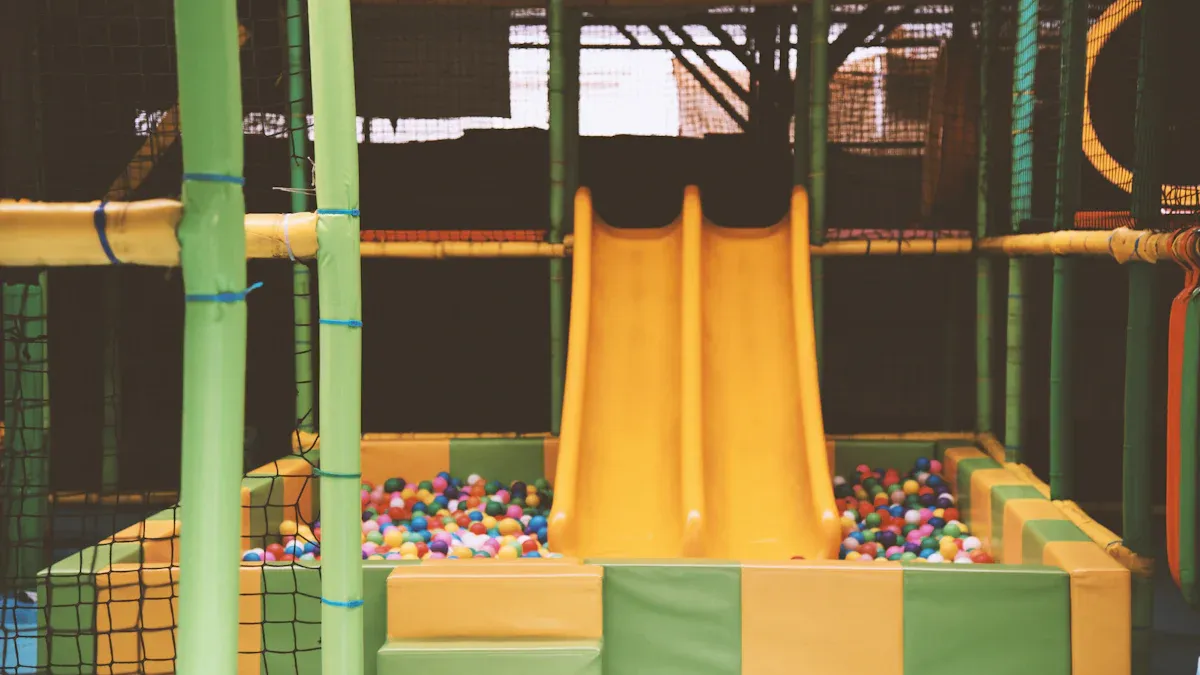
What Is Commercial Soft Play Equipment and How Is It Used
Commercial soft play equipment gives kids a safe place to play indoors.

You see soft surfaces and padded shapes, not hard metal or wood. Businesses use these designs to keep kids from getting hurt. Kids like the bright colors and fun themes. You can pick custom layouts for your space. Safety features help kids explore and learn. Kids use slides, climbers, and foam blocks. Many businesses use commercial soft play equipment to bring in families. It gives kids a fun experience. You see kids play, move, and use their imagination every day.
Key Takeaways
- Commercial soft play equipment gives kids a safe place to play inside. It is also fun for them. Soft materials and rounded edges help keep kids safe. Regular checks help stop injuries from happening. Soft play areas help kids grow strong and make friends. They also help kids feel good about themselves. Businesses use soft play equipment to bring in families. This makes families want to come back again. You can change the layout and theme of soft play equipment. This helps it fit different spaces and ages.
Commercial Soft Play Equipment Overview
What Is Soft Play Equipment
You can find soft play equipment in many indoor places. This equipment uses soft and padded surfaces. Bright colors and fun shapes make it exciting for kids. Soft play equipment is different from regular playgrounds. It focuses on comfort and safety. You will not see hard metal or sharp edges here. Instead, you see foam, plastic, and other soft materials. These materials help stop injuries and make kids feel safe.
You can check the table below to see the most common materials in soft play equipment:
| Material | Properties | Advantages | Disadvantages |
|---|---|---|---|
| High-quality plastics | Lightweight, weather-resistant | Great for slides and climbing structures | Not as strong as metals |
| Steel | Strong, durable | Gives strong support | Heavy and needs more care |
| Wood (engineered) | Natural look, strong | Good for themed areas | Can get damaged by water |
| Foam | Soft, absorbs impact | Keeps play areas safe | Can wear out over time |
Each material has its own benefits. Foam gives the most protection from falls. High-quality plastics and steel make the equipment strong. Engineered wood gives a natural look for themed spaces. When you pick soft play equipment, you want it to be safe, strong, and look good.
Key Features and Safety
Safety is the most important thing in soft play equipment. Every piece is made to keep kids safe. You see rounded edges, soft padding, and safe materials in good equipment. Indoor soft play equipment must follow strict safety rules. These rules include:
- Following local rules and guidelines from groups like ASTM and EN.
- Using safe materials and rounded edges.
- Having good padding and safe floors.
- Checking equipment often to keep it safe.
- Working with companies that care about safety.
You may also see certifications like ISO 9001 for playground safety, ISO 14001 for green practices, IPEMA for equipment and surfacing, and CPSC guidelines for playground safety.
You might want to know about common injuries and how to stop them. The most common injuries are fractures, soft tissue injuries, and cuts. You can help stop these injuries by:
- Lowering the highest fall height (1.5 meters for preschoolers, 2.3 meters for older kids).
- Using barriers and guardrails.
- Adding better padding with foam, synthetic materials, or wood chips.
- Making sure adults watch kids while they play.
Tip: Always check your soft play equipment for damage or wear. Regular checks help keep the play area safe and fun.
Indoor Soft Play Settings
You can find indoor soft play equipment in many places. The most common places are:
- Daycare centers
- Schools
- Homes
You also see indoor soft play areas in shopping malls, family entertainment centers, and gyms. These places use soft play equipment to make safe and fun spaces for kids. You can change the layout to fit your space and needs. Some soft play equipment is small and simple. Others fill big rooms with slides, ball pits, and climbing structures.
Indoor soft play gives kids a place to move, explore, and learn. It helps kids build social skills, balance, and coordination. Parents feel better because the equipment is safe and high quality. When you pick indoor soft play equipment, you make a nice space for families and kids.
How Soft Play Equipment Is Used
Typical Locations and User Groups
Indoor playgrounds are found in many places. Businesses put them in malls and gyms. Schools and daycare centers use them for safe play. Hotels, airports, and restaurants also have indoor playgrounds. Each one gives kids a soft area to explore.
Many groups use indoor playgrounds. Kids of all ages like to play there. Parents bring toddlers for safe fun. Older kids climb, slide, and jump. Children with special needs enjoy indoor playgrounds too. Soft play areas help kids make friends. All kids can play together. Ramps and special swings help kids learn and grow. Indoor playgrounds help kids feel good and confident. They teach people to accept others.
- Children of all ages
- Toddlers and preschoolers
- Children with special needs
- Families and caregivers
Every child should get to play in an indoor playground that fits their needs. Special features help everyone feel welcome.
Play Activities and Experiences
Indoor playgrounds have many fun things to do. Kids crawl through tunnels and jump in ball pits. They climb foam blocks and go down slides. Interactive panels keep kids busy. Kids race through obstacle courses. Each playground has new ways to play.
Interactive things help kids stay active. Kids use their imagination in soft play areas. Indoor playgrounds help kids explore and be creative. Kids work together and learn social skills. Soft play areas make playtime fun and help kids learn.
- Climbing and sliding
- Jumping and balancing
- Exploring themed zones
- Playing with interactive panels
Indoor playgrounds give kids a safe place to move and learn. Soft play areas help kids grow and make friends. Families make happy memories in indoor playgrounds.
Benefits of Soft Play
Physical and Developmental Benefits
Soft play gives children many good things. When kids go to a soft play area, they get a safe place to move. Kids can climb, jump, and crawl. These actions help them get better at moving and make their muscles strong. Soft play equipment helps kids learn new things as they grow.
- Climbing structures help kids use big muscles. Kids get stronger arms and better balance.
- Swings help kids make their legs stronger and learn to balance.
- Slides teach kids how to move their bodies as they go down.
- Monkey bars help kids get better at using their hands and arms.
- See-saws help kids make their core strong and learn to work with others.
Kids get more than just strong bodies. Soft play helps kids talk to others and feel good about themselves. When kids play together, they learn to share and take turns. They also learn how to solve problems. Kids make friends and feel more sure of themselves. Soft play areas help kids use their imagination and be creative.
The table below shows how soft play helps kids grow in different ways:
| Aspect of Development | Impact |
|---|---|
| Physical Development | Helps kids get better at moving, balancing, and playing. |
| Cognitive Stimulation | Makes kids use their senses and learn new things. |
| Socialisation Skills | Helps kids talk, work together, and care about others. |
| Emotional Well-being | Helps kids feel less stressed and handle hard things. |
| Parent-Child Bonding | Makes families closer by playing together. |
Tip: Letting kids play in soft play areas helps them grow in many ways. You help their bodies, minds, and feelings every time they play.
Business Advantages
Businesses also get good things from soft play equipment. Soft play areas bring in families and make them want to come back. Kids want to return to places where they can play and have fun. This makes your business special.
- Soft play equipment lets kids play every day, even when it rains. Families come more often because kids always have fun.
- Memberships and loyalty programs help your business get steady money. Families who like your soft play area will join and visit again.
- A bright and fun soft play space makes families remember your business. They tell their friends about it.
Soft play areas help your business look good. Parents trust places that care about safety and kids. When you add soft play, you show you care about families. This trust brings more visits and happy customers.
Note: Soft play equipment is not just for kids. It is a smart choice for your business. You make a friendly place that helps kids grow and keeps families coming back.
Soft play gives many good things. Kids get stronger and feel better about themselves. Families have fun together. Your business becomes a favorite place for fun and learning.
Types of Soft Playground Equipment

Modular Structures
Modular structures are common in soft playgrounds. These use soft foam and have rounded edges. This helps keep kids safe while they play. You can change the setup to fit your space. You can add or take away parts as needed. Modular designs let you pick features for different ages. You can also choose skill levels for each area.
Here is a table that shows how modular soft play structures compare to other types of equipment:
| Characteristic | Modular Soft Play Structures | Other Equipment Types |
|---|---|---|
| Material Selection | Soft foam for safety | Varies, may include harder materials |
| Safety Features | Rounded edges, low heights | May not prioritize safety as much |
| Adaptability | Designed for evolving needs | Often fixed designs |
| Age Appropriateness | Tailored for different age groups | Generalized for broader age ranges |
| Play Complexity | Supports basic to complex play | Typically focused on one age group |
You can make modular soft playground equipment match your business. Many companies offer themes like pirate ships or jungles. You can use your space well and make a special playground.
Ball Pits and Foam Areas
Ball pits and foam areas are favorites in soft playgrounds. Kids jump, crawl, and explore in these safe spots. You should check if kids have allergies to ball pit materials. Ask about the balls and cleaning products used. This helps keep the playground safe for everyone.
Safety standards protect kids in ball pits and foam areas:
| Safety Standard | Description |
|---|---|
| EN 71 | Makes sure ball pit balls are safe and non-toxic. |
| ASTM F1918 | Gives safety rules for soft play equipment. |
| ASTM F963 | Checks that ball pit balls are not toxic. |
Pick the right size of ball pit balls to avoid choking. Always look for loose parts or broken padding. Clean your playground often to keep it safe.
- Pick equipment for the right age group.
- Choose the right ball size for safety.
Tip: Clean and check your ball pits and foam areas often. This keeps them safe and fun for kids.
Slides and Climbers
Slides and climbers make soft playgrounds more fun. These help kids learn balance and coordination. You see foam blocks, slides, and climbing shapes in many playgrounds. Bright colors make kids want to play and make friends.
Here is a table showing how slides and climbers support physical development:
| Benefit | Description |
|---|---|
| Coordination | Slides help kids use many skills together. |
| Balance | Climbing helps kids stay steady. |
| Spatial Awareness | Slides and climbers help kids learn about space. |
Some play sets mix slides, climbers, and foam blocks. These sets fit well in many playgrounds.
Toddler Soft Play Equipment
Toddler soft play equipment uses low climbers, soft mats, and tunnels. These help toddlers play safely and get stronger. Slides and swings with bucket seats keep toddlers safe. Soft blocks and plush toys help toddlers learn to move and see new things.
Here is a table with features found in toddler soft playground equipment:
| Feature | Description |
|---|---|
| Soft Mats and Crawling Tunnels | Padded surfaces for crawling and early walking. |
| Soft Blocks and Shapes | Big, light blocks for motor skills. |
| Soft Plush Toys | Help toddlers see and feel comfort. |
| Mirror Panels | Help toddlers see themselves and learn. |
| Low-Level Climbing Structures | Let toddlers practice balance and coordination. |
You can change toddler play areas to fit your space and theme. Many playgrounds use bright colors and fun shapes for young kids.
Note: Always pick soft playground equipment made for the right age group. This keeps play safe and fun for everyone.
Choosing and Maintaining Soft Play Equipment
Selection Factors
When you pick soft play equipment, you must think about a few things. The right choice makes your space safe and fun for kids. Here are some things to look at:
- Manufacturer Reputation: Find out if the company is trusted. Ask other places what they think.
- Material Quality: Pick strong and safe materials. Good materials last long and keep kids safe.
- Design, Size, and Shape: Choose a design that fits your area. Make sure it looks fun and fits the number of kids.
Think about your space and who will use the equipment. The table below shows what you should remember:
| Key Considerations | Description |
|---|---|
| Age Group | Pick equipment that fits kids’ needs and skills. |
| Space Availability | Measure your area so kids have room to play. |
| Budgeting | Plan how much you want to spend. Prices can be very different. |
| Community Involvement | Ask parents and kids what they want in the play area. |
If you want everyone to play, pick equipment for all abilities.
Installation Tips
Good installation keeps your play area safe. Follow these steps for the best results:
- Hire experts who know how to install indoor playgrounds. They follow safety rules.
- Use equipment that meets safety standards like ASTM and NFPA.
- Leave enough space between each structure. Use soft floors and make fall zones.
- Plan for regular checks and maintenance.
Tip: Always measure your space before you start. Use soft floors to help protect kids from falls. After you finish, check for any dangers before letting kids play.
Maintenance and Safety Checks
You need to keep your equipment in good shape. Regular checks help you find problems early and keep kids safe. The table below shows how often to check your equipment:
| Frequency | Task Type |
|---|---|
| Daily | High Frequency Checks |
| Weekly | High Frequency Checks |
| Monthly | Varies by equipment |
| Quarterly | Low Frequency Checks |
| Annually | CPSI Inspection |
| Seasonally | Environmental Checks |
Look for cracks, broken parts, or dents. If something wobbles or is loose, fix it right away. Clean your equipment often. Use soft cloths and gentle cleaners, especially on steel and plastic. Taking care of your equipment helps it last longer and saves money.
Keeping up with maintenance can cost $5,000 to $20,000 each year, but it stops bigger repairs and keeps your play area safe for everyone.
You see commercial soft play equipment in many indoor spaces. It gives children a safe place to play and helps your business stand out. You can find many benefits:
- Kids build social skills and make friends.
- Imaginative play helps creativity.
- Active play supports fitness.
- Children gain confidence.
- Free play encourages exploration.
- Indoor areas allow play all year.
- Families visit more often.
- Equipment fits different spaces.
- Repeat visits boost your business.
- All children can play together.
You should think about your space and your customers. Try market research, look at your competition, and ask families what they want. Talk to experts before you choose your soft play solution.
FAQ
What age groups can use commercial soft play equipment?
Soft play equipment is made for many ages. Toddlers, preschoolers, and older kids can use it. Each area is designed for a certain age group. Always look at the age guide before kids play.
How do you clean and maintain soft play equipment?
Clean the surfaces every day with gentle cleaners. Check for damage once a week. Change any broken or worn parts right away. Cleaning and checking often keeps the play area safe and nice.
Can you customize soft play equipment for your space?
You can pick your own layout, colors, and themes. Many companies have modular designs. You can make the equipment fit your room and match your business.
Is soft play equipment safe for children with special needs?
Some soft play equipment has ramps and sensory panels. These features help all kids play together. Always ask the company about options for all abilities.
How often should you inspect soft play equipment?
Check the equipment every day to keep it safe. Do deeper checks every month. Get a professional to inspect it once a year to meet safety rules.