

Did you know that about 40% of playground injuries in 2024 happened because equipment was not cared for well? When you look after commercial playground equipment for sale, you help stop accidents and keep kids safe. Checking equipment often helps you find problems and dangers early. Cleaning and putting oil on moving parts helps equipment work well. Tightening bolts and using protective coatings helps stop damage and rust. Taking care of the surfacing lowers the chance of bad injuries. Your work with maintenance keeps children safe and protects the community’s money spent.
Key Takeaways
- It is important to check equipment often. Look at playground equipment every week, month, and twice a year. This helps find problems early. It also helps keep kids safe.
- Use the correct way to clean each material. Wash surfaces with gentle soap. Clean places people touch a lot to stop germs from spreading.
- Put oil on moving parts every month. This helps swings and slides work well. It also stops accidents from broken parts.
- Keep the ground deep enough under equipment. Make sure there are at least 12 inches of loose-fill under play areas. This helps protect kids if they fall.
- Write down all maintenance work. Record checks and repairs. This helps you see problems and follow safety rules.
Regular Inspections
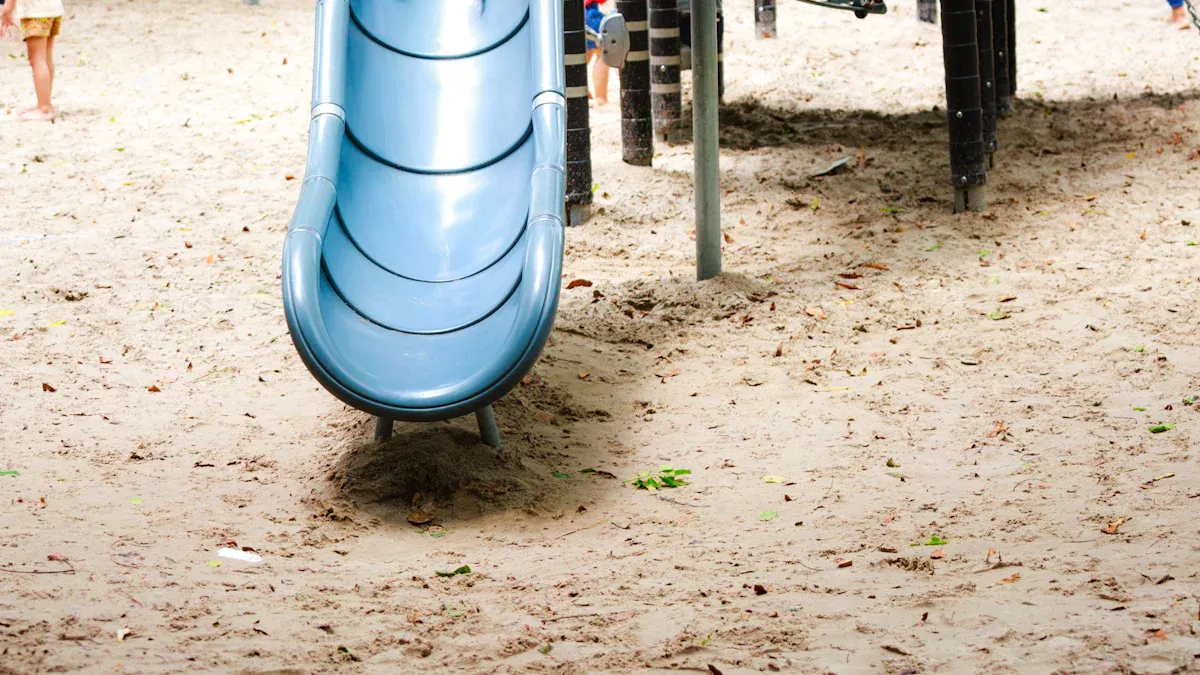
You help keep playgrounds safe for everyone. Checking equipment often helps you find problems early. This stops injuries and keeps the playground nice.
Inspection Schedule
It is important to follow a set inspection plan. This lets you find issues before they get worse. It also helps you follow safety rules. Here is an easy guide:
| Frequency | Description |
|---|---|
| Weekly | Routine checks done by the property owner. |
| Monthly | Deeper checks that the owner can do too. |
| Bi-annual | Professionals inspect twice a year for safety. |
Weekly checks help you spot small problems fast. Monthly checks let you look for damage or wear. Twice a year, call a professional to check safety.
High-Traffic Area Checks
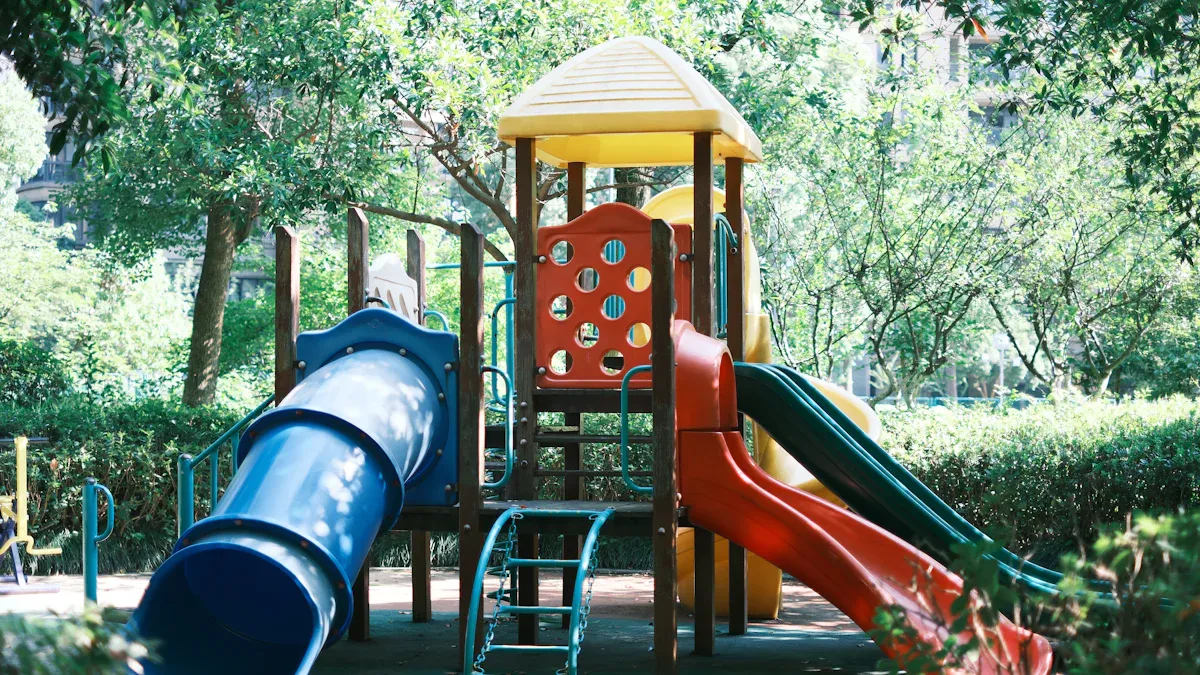
Busy areas need more care. Swings, slides, and climbing things wear out faster. Look for broken parts, loose screws, sharp edges, and missing pieces. Surfaces under can hide things you trip on or lose their padding. commercial playground equipment for sale Openings in might trap hands or feet, so check for these risks.
| Component Type | High-Risk Issues Identified |
|---|---|
| Equipment | Broken parts, loose screws, sharp edges, missing components |
| Surfaces | Not enough padding, tripping hazards, bad drainage |
| Entrapment Risks | Openings that can trap hands, feet, or heads |
| Overall Site | Cleanliness, visibility, good signs |
Tip: Pay extra attention to places where kids run, jump, or climb. These spots wear out quickly and need more checks.
Using Checklists
A checklist helps you remember what to look for. Scan for dangers before play starts each day. Every week or month, check all equipment by hand. Look at nuts, bolts, and screws to see if they are loose or broken. Check moving parts like swing chains for wear. Look at wood for rot and plastic for cracks.
- Look for dangers before play
- Check hardware for looseness or damage
- Check moving parts for wear
- Look at surfaces for cracks, splinters, or missing pieces
Using a checklist helps you not forget anything. Fixing problems fast keeps the playground safe and fun.
Cleaning and Debris Removal
When you look after commercial playground equipment for sale, you help stop accidents and keep kids safe clean protects children from germs and keeps the area looking good. You help prevent slips and falls when you remove dirt and trash. Clean equipment also lasts longer and works better.
Cleaning Methods for Different Materials
You should use the right cleaning method for each type of playground material. This helps you avoid damage and keeps surfaces safe for play.
- Use mild soap and water for most surfaces. Rinse well to remove any residue.
- For hard plastics like slides and panels, clean with mild soap or detergent and water. Rinse and use an approved disinfectant.
- Vinyl and coated soft play elements need gentle cleaners. Dry them completely to stop mold from growing.
- Safety netting and fabric parts need regular vacuuming and spot cleaning.
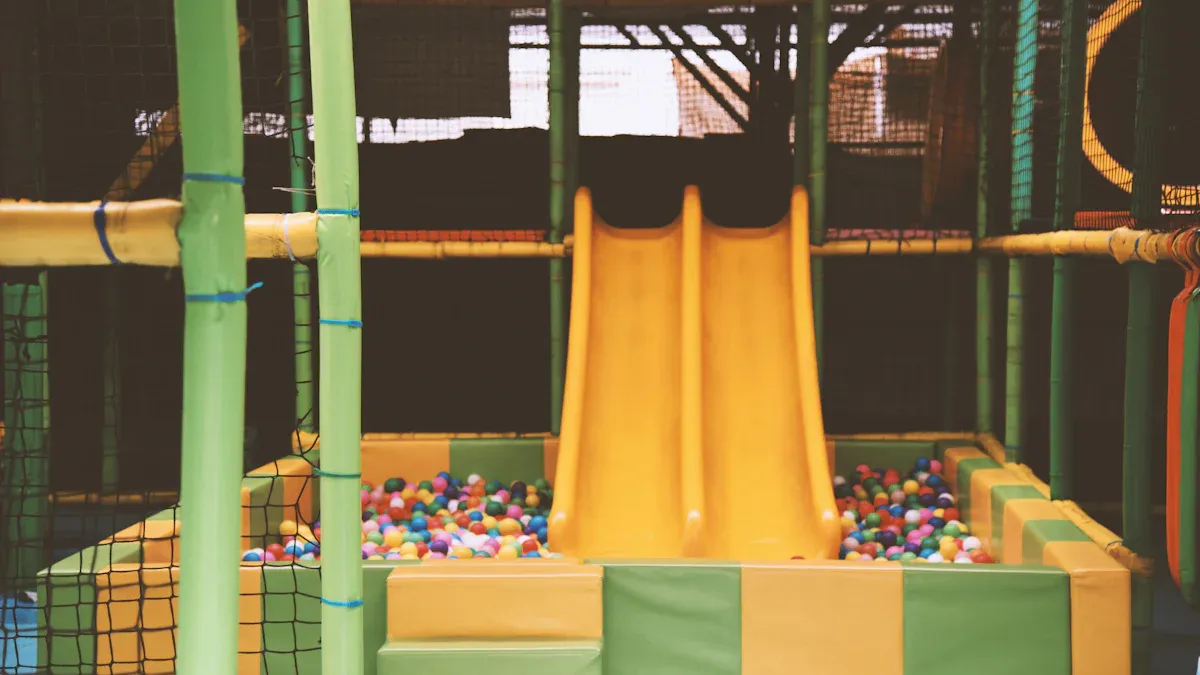
- For ball pits, empty and wash the balls often. Clean the pit liner as well.
- On safety mats and carpet tiles, vacuum daily and deep clean every two months.
Tip: Always check the manufacturer’s instructions before using a new cleaner. This helps you avoid damage and keeps warranties valid.
Sanitizing High-Touch Surfaces
High-touch areas like handrails, swings, and slides need extra care. You should wipe these spots weekly or biweekly, depending on how many children use the playground. In busy seasons, clean more often. Use a disinfectant that is safe for children and approved for playground use. Pay special attention to restrooms and eating areas. Clean and disinfect these spaces often to stop the spread of germs.
Removing Trash and Debris
You should remove trash and debris every day. Pick up litter, fallen branches, and leaves. Clear away sand or mulch that has moved onto walkways. This keeps the playground safe and prevents slip hazards. A clean playground looks inviting and helps everyone enjoy their time outside.
Moving Parts Maintenance
Moving parts like swings, slides, seesaws, and spinners need special care. You help keep these parts safe and working well when you check them often. If you ignore moving parts, they can break or become dangerous. Regular care helps you avoid costly repairs and keeps children safe.
Lubrication Steps
Lubrication keeps moving parts smooth and quiet. You should check these parts every month. Use the right amount of oil or grease. Too much oil can make surfaces slippery, which is unsafe. Not enough oil can cause squeaks or jams.
| Equipment Type | Best Practice |
|---|---|
| Swings | Lubricate chains and joints monthly. Wipe off extra oil to prevent drips. |
| Seesaws and Spinners | Lubricate moving parts for smooth rotation. Avoid excess oil to prevent slips. |
| Slides with Moving Parts | Use a small amount of lubricant on hinges and joints. |
Tip: Always use lubricants that the manufacturer recommends. This helps you protect the equipment and keep warranties valid.
Tightening Bolts
Loose bolts can make equipment wobble or fall apart. You should check all bolts, nuts, and screws during each inspection. Use a wrench or screwdriver to tighten them. Pay close attention to swings, climbing frames, and spinning equipment. If you find a missing or broken bolt, replace it right away.
- Check bolts and screws every month.
- Tighten any loose hardware.
- Replace damaged or missing parts quickly.
A simple tool kit helps you do this job fast. Keeping bolts tight makes the playground safer for everyone.
Preventing Rust
Rust weakens metal and makes equipment unsafe. You can stop rust by keeping metal parts dry and using protective coatings. In wet or humid places, choose stainless steel or treated wood for new equipment. Paints, varnishes, and powder coatings block moisture and stop rust from forming.
- Keep metal dry and insulated.
- Apply rust-inhibiting paint or powder coating.
- Use stainless steel or aluminum for better protection.
- Check for rust spots and fix them right away.
Note: Regular rust checks help you catch problems early. Quick action keeps equipment strong and safe for years.
Surfacing and Impact Protection
Good surfacing under playground equipment helps protect kids from bad injuries. You help keep these areas safe for everyone. Materials like sand, rubber mulch, or engineered wood fiber (EWF) help cushion falls. These materials lower the chance of broken bones or head injuries. When you take care of surfacing, you help stop serious harm.
Maintaining Surfacing Depth
You should check how deep loose-fill surfacing is. The right depth helps soften falls. Safety rules say you need:
- The CPSC says to use at least 12 inches of loose-fill surfacing under and around public playground equipment.
- For home playgrounds, start with 12 inches and keep at least 9 inches as the material settles.
Use a ruler or depth gauge to measure the surfacing. Pay attention to busy spots like under swings and slides. If you see thin spots, add more material right away.
Tip: Deep surfacing works best when it is flat and clean.
Replenishing Soft-Fall Areas
Soft-fall materials get worn down in busy playgrounds. You need to add more material to keep these areas safe. The table below shows how often to add new material:
| Material | High-Traffic Areas | Low-Traffic Areas | Notes |
|---|---|---|---|
| Rubber Mulch | 5-15% each year | 5-15% each year | Check depth after heavy use |
| EWF (Wood Fiber) | Every 6-12 months | Every 12-18 months | Look under swings and slides |
Check these spots during your regular inspections. Add new material when needed to keep the right depth.
Inspecting for Damage
Look for damage every time you check the playground. Common problems are:
- Worn spots in busy areas
- Metal edges or anchors showing
- Holes, cracks, or gouges in the surface
Fix small cracks or holes with patching compounds made for playgrounds. Always follow the instructions from the manufacturer for repairs. Fixing problems quickly stops them from getting worse.
Regular checks and quick repairs help keep the playground safe and fun.
Weatherproofing Strategies
Protecting playground equipment from weather helps it last longer. It also keeps children safe. You should plan for every season. Use the right coatings for each type of weather. You must also get ready for storms or other bad weather.
Seasonal Protection
Every season brings new problems for playground equipment. You can use these ideas to keep things in good shape:
- Winter: Remove snow and ice fast. This stops people from slipping. Put oil on moving parts so they do not freeze. Cover equipment with special covers to keep out water.
- Spring: Look for cracks or weak spots from cold weather. Clean and fix surfaces before kids play again.
- Summer: Check for sun damage on plastic and metal. Make sure shade covers are tight. This keeps equipment cool and safe.
- Fall: Pick up leaves and trash. This keeps drains clear and stops slippery spots. Check equipment to get ready for winter.
Tip: Wood that is not treated can bend or crack in winter. Put on a safe, waterproof sealant before it gets cold.
Protective Coatings
You can use special coatings to protect playground equipment from rain and sun. These coatings help stop rust, bending, and cracks.
- Put weatherproof sealant or paint on surfaces. This keeps out water and sun.
- Use wood preservatives to keep water and bugs away from wood.
- Cover metal parts with rust-proof paint or powder coating. This stops rust and makes them last longer.
- Pick good stains for wood. These help stop fading and cracks.
Note: Powder coating is great for metal. It protects better from weather and sun than normal paint.
Preparing for Extreme Conditions
Big storms like hurricanes or snowstorms can hurt playgrounds. You should do these things to protect your equipment:
- Look for loose bolts or broken parts.
- Clean off dirt and trash.
- Put rust-proof primer on metal and UV spray on plastic.
- Check drains so water does not collect.
- Tell your community about safety steps.
After a big storm, check if everything is still strong. Fill and seal cracks in wood. Test moving parts and add oil if needed. Pick up loose trash and look for bugs.
Tip: Getting ready early helps you save money and keeps playgrounds safe for everyone.
Staff Training and Procedures
You help keep playgrounds safe and friendly. Staff who know what to do can stop accidents. They also help keep equipment working well. When you follow clear steps, every child can play safely.
Training Maintenance Teams
A good training program is important for your team. Training teaches everyone what to do and how to do it. Here are some key parts of a strong program:
- Teach staff to check equipment every day, week, and month.
- Show how to clean surfaces and follow hygiene rules.
- Practice talking with guests and watching kids as they play.
- Go over cleaning steps and personal hygiene rules.
- Support teamwork and reporting problems clearly.
Tip: Training often helps staff learn new safety rules and equipment updates.
Safety Protocols
You must use safety steps each time you check or fix equipment. These steps help lower risks and keep everyone safe:
- Check all playground equipment using the latest safety standards like ASTM and ADA.
- Plan repairs and maintenance as soon as you find a problem.
- Make sure the playground is easy to use for all children.
- Write down every inspection and repair in detail.
- Use professional inspectors for checks twice a year or once a year.
- Do visual checks, look at surfaces, and check hardware.
- Test if equipment is stable and look for sharp edges or gaps.
Note: Using these steps helps you follow safety rules and keep children safe.
Reporting Issues
You should ask everyone to report problems fast. Staff and people in the community can help find issues early. Friendly signs in the playground remind people to tell someone about problems. Keep good records of checks and repairs. This helps you see patterns and fix problems that happen again.
- Ask staff to report dangers right away.
- Use signs to remind visitors to share safety worries.
- Write down all reports and repairs in a logbook or on a computer.
Tip: Fast reporting and good records help you fix problems before they get worse.
Maintenance Records and Compliance
Good records help you keep the playground safe. They also help you follow the law. Write down every inspection, repair, and cleaning. This lets you find problems early. You can also show proof if someone asks.
Keeping Accurate Logs
You need to write down each maintenance job. Record the date, what you checked, and what you fixed. You can use a notebook, paper form, or an app. Good logs remind you when to check things again. They also help you see which equipment breaks a lot.
Tip: Look at your logs every month. This helps you plan repairs and save money for new parts.
Digital Tracking Tools
Digital tools help you track maintenance and stay organized. Many parks and schools use special software for playground care. These tools remind you about checks and store repair records. They also help you follow safety rules.
| Tool Type | Features |
|---|---|
| Park maintenance software | Tracks projects, predicts costs, and manages local rules. |
| Tool tracking systems | Keeps data for audits and safety checks. |
| Compliance software | Stores policy details, versions, and audit trails. |
Pick a tool that works for you. Digital records are easy to update and share with your team.
Meeting Regulations
You must follow safety rules from national groups. In the United States, the Consumer Product Safety Commission (CPSC) gives playground safety tips. The Americans with Disabilities Act (ADA) makes sure all kids can use the playground. ASTM standards set rules for different age groups.
- CPSC: Playground safety tips.
- ASTM F1487: Rules for equipment for kids aged 2-12.
- ASTM F2373: Rules for equipment for kids aged 6 months to 23 months.
- ADA: Rules for playground access.
Good records and digital tools help you follow these rules and keep kids safe.
Manufacturer Guidelines
When you follow manufacturer guidelines, you help keep playground equipment safe. This also helps the equipment last longer. You protect your investment by using the right steps. You also make sure warranties stay valid.
Warranty Requirements
Manufacturers give different warranties for playground equipment. You need to know what each warranty covers. Some actions can make the warranty not work. Most warranties want you to do certain maintenance. Do not make changes that are not allowed. The table below shows common warranty types and what they cover:
| Warranty Type | Duration | Coverage | Exclusions |
|---|---|---|---|
| Manufacturer’s Warranty | Varies | Repair or replacement of defective parts | Misuse, negligence, unauthorized modifications |
| Limited Warranty | 10-15 years | Defects in material and workmanship | Abuse, improper installation, unauthorized changes |
| Moving Parts Warranty | 1 year | Coverage for moving parts | Non-residential use |
| Lifetime Warranty | Lifetime | Defects in materials and workmanship | Acts of God, lack of maintenance |
| Replacement Parts Warranty | Balance of original warranty | Same as original warranty | Same as original warranty |
Tip: Always read the warranty terms before you do any maintenance. This helps you avoid mistakes that could cancel your coverage.
Recommended Schedules
You should use the maintenance schedule from the manufacturer. This keeps equipment safe and helps it last longer. Regular checks and professional inspections are important. Here are some best practices:
- Check equipment often to find problems early.
- Use a schedule to track repairs and wear.
- Plan professional inspections to meet safety rules.
Regular care helps you find damage and keep playgrounds safe for everyone.
Support Resources
Manufacturers give you many resources to help with maintenance. You can find guides, checklists, and after-sales support. These tools make your job easier and help you follow best practices.
| Support Resource | Description |
|---|---|
| Inspection Recommendations | Visual, functional, and safety inspections from experts. |
| Maintenance Resources | Guides for tightening fasteners, fitting missing parts, and replacing worn components. |
| After-sales Support | Help with warranty claims, spare parts, and special materials like Robinia wood. |
- Use online guides and checklists for cleaning and repairs.
- Ask for help with warranty claims or spare parts.
- Follow tips for keeping surfaces and nearby areas in good shape.
Using manufacturer resources helps you keep playground equipment safe, clean, and ready for play.
Maintaining Commercial Playground Equipment for Sale
Getting commercial playground equipment for sale ready to sell is important. You help keep it safe and good for the next owner. You need to check, clean, and make sure it follows the rules before selling or giving it away.
Inspection Before Sale
You have to look at every part before you sell it. This helps you find problems and follow safety rules. Use trusted group guidelines to help you check. The table below lists important groups and what they do:
| Source | Description |
|---|---|
| CPSC | Shares safety rules for checking playground equipment. |
| ASTM International | Makes technical rules for playground equipment. |
| ADA | Gives rules for making playgrounds safe for kids with disabilities. |
Look for loose bolts, worn spots, and missing pieces. Make sure moving parts work well. Check for rust or damage. You also need to see if the equipment meets all rules.
Cleaning and Presentation
Clean equipment looks better and keeps kids safe. Use green cleaning products to help the earth and children. Clean handles and handrails often to stop germs. For metal, brush off dirt and wash with mild soap. Clean plastic with soapy water, then use vinegar and water to disinfect. Use soft cleaners for wood and follow the maker’s instructions. Pick up dirt and trash often to keep things neat.
- Use green cleaning products.
- Clean handles and rails often.
- Brush and wash metal parts.
- Disinfect plastic with vinegar and water.
- Use soft cleaners for wood.
- Pick up dirt and trash often.
A clean playground makes commercial playground equipment for sale worth more.
Ensuring Safety Standards
You need to check that the equipment follows all safety rules before selling. Strong anchors keep equipment steady. Good spacing stops kids from bumping into each other. Good drainage keeps surfaces dry and safe. All kids should be able to play safely. Certified installers should check everything for safety. Keep records of setup and care to show you followed the rules.
- Anchor equipment tightly.
- Space parts the right way.
- Make sure water drains well.
- Let all kids use the playground.
- Have certified installers check everything.
- Keep good records.
Doing these things helps make commercial playground equipment for sale safe and ready for new kids.
You help make playgrounds safer and last longer. When you check, clean, and fix things often, you find problems early. Taking care of equipment helps it work for many years. This also protects the money you spend. Look at the table below to see how taking care of equipment saves money:
| Benefit | How It Helps You Save Money |
|---|---|
| Equipment Replacement Costs | Makes equipment last longer and stops early replacements |
| Budget Control | Lets you plan ahead and avoid surprise costs |
| Compliance-Related Expenses | Stops big fines from not following safety rules |
- Playgrounds that are cared for cost less as time goes on.
- Your work keeps kids safe and having fun.
Make a plan to care for equipment and teach your team now!
FAQ
How often should you inspect playground equipment?
Check commercial playground equipment for sale every week. Monthly checks help you find bigger problems. Twice a year, ask a professional to do a full inspection.
Tip: Playgrounds with lots of kids need more checks.
What cleaning products work best for playground surfaces?
Use mild soap and water for most surfaces. Pick disinfectants that are safe for children for places kids touch a lot.
- Do not use strong chemicals
- Always look at the manufacturer’s instructions
How do you prevent rust on metal playground parts?
Put rust-proof paint or powder coating on metal. Keep metal dry.
| Method | Benefit |
|---|---|
| Paint/Coating | Stops water from getting in |
| Regular checks | Finds rust early |
Who should report playground safety issues?
You and your team should tell someone about problems right away. Ask visitors to speak up if they see something wrong.
Telling about problems fast helps you fix them before anyone gets hurt.